

Let’s cut to the chase. If you’ve been following Sugar Cosmetics or eyeing their products at your local store, you’ve probably wondered whether this homegrown beauty brand is actually making money. After all, we’ve seen countless startups burn through cash while chasing growth. So, what’s the real deal with Sugar?Is Sugar Cosmetics Profitable?
The short answer? They’re getting there. And the journey is pretty fascinating.
The Big Breakthrough Nobody Saw Coming

December 2023 was a game-changer for Sugar Cosmetics. After nearly eight years of operating in the red, founder Vineeta Singh announced something that made headlines across the business world – Sugar had finally turned profitable. Not for the entire year, mind you, but for the first time since the company started, they actually made money in a single month.
Now, before you start thinking this is just another startup claiming victory too soon, let’s dig into what this really means. Vineeta herself was pretty upfront about it. She mentioned that the company crossed ₹500 crore in revenue for FY24 and expected to stay profitable through the last quarter. That’s not just a fluke – that’s a trend.
But here’s where it gets interesting. Singh also shared that they’re looking at a 2-3 year timeline before going public with an IPO. Why the wait? Because anyone who’s been in business knows that one profitable month doesn’t cut it. You need a solid track record before asking public investors to trust you with their money.
Triphala Powder: The Gentle Daily Tonic for Digestion, Detox, and Balance
Dermatouch Face Wash Review: A Personal Experience with Honest Insights
Let’s Talk Numbers (Because They Matter)
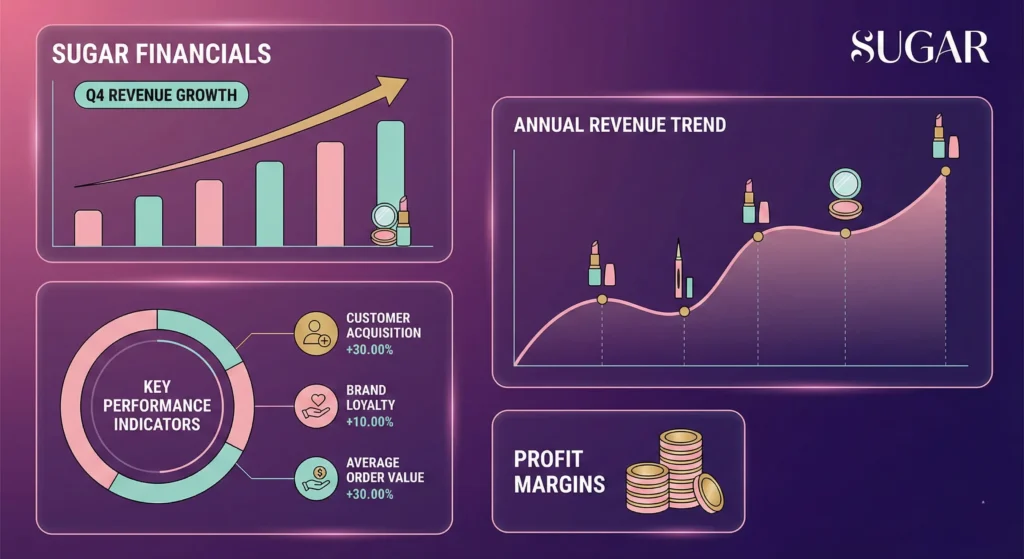
I know, I know – financial statements aren’t exactly thrilling. But stick with me here because Sugar’s numbers tell a story that’s actually pretty compelling.
In FY24, Sugar Cosmetics pulled in ₹505.10 crore in revenue. That’s a solid 20% jump from the previous year’s ₹420.28 crore. Not bad, right? They even made ₹2.5 crore from exports, which shows they’re testing waters beyond India.
But here’s the reality check – they still posted a net loss of ₹67.58 crore. Before you panic, though, that’s actually an improvement. Their losses dropped by 11.3% compared to FY23 when they lost ₹76.24 crore. So yes, they’re still losing money overall, but the gap is closing.
The tricky part? For every rupee Sugar earns, they’re spending ₹1.16. That’s not sustainable long-term, and they know it. A huge chunk of that spending goes to advertising – around ₹162 crore, which is roughly 32% of their revenue. In the beauty business, you’ve got to spend money to stay visible, especially when you’re competing with giants who’ve been around forever.
The FY23 Explosion

Want to talk about impressive growth? Look at what happened in FY23. Revenue jumped a whopping 89% from ₹221.8 crore to ₹420.2 crore. That’s not incremental growth – that’s explosive expansion. Even though losses stayed pretty much flat at ₹76.2 crore, their EBITDA margin improved dramatically from -30.48% to -14.55%.
In plain English? They were getting way more efficient at running the business, even while losing money.
So What’s Making Sugar Actually Work?

Here’s where Sugar’s story gets really interesting. They’re not just another makeup brand trying to copy what works in the West. They’ve figured out something crucial that a lot of foreign brands miss.
They Actually Understand Indian Skin
Before starting Sugar, Vineeta Singh ran a beauty subscription box called Fab Bag. Through that, she got feedback from over 200,000 Indian women about what they really wanted. Most international brands? They just slap their global products on Indian shelves and hope for the best.
Sugar did the opposite. They created products specifically for Indian skin tones. They made formulas that could survive our crazy humid summers. They priced things so that a college student could afford them without eating instant noodles for a week. And they packaged everything in this bold, unapologetic way that resonated with young Indian women who were tired of being told how to look.
Take their Smudge Me Not liquid lipstick. It became a bestseller because it actually lasted through Mumbai’s heat and humidity. That’s the kind of product innovation that builds loyalty.
They’re Everywhere (And That’s On Purpose)
You know what’s smart? Sugar didn’t just stay online. They went all-in on physical retail too.
Today, you can find Sugar products at over 45,000 stores across India. They’ve opened nearly 200 exclusive brand stores. Walk into any decent mall, and there’s probably a Sugar shop. This isn’t just about brand presence – physical retail now makes up more than 50% of their revenue.
Why does this matter? Because acquiring customers online has become ridiculously expensive. Every brand is fighting for the same eyeballs on Instagram and Facebook. But when someone walks into a store and sees your products? That’s a different kind of discovery, and it doesn’t cost you ₹500 in Facebook ads.
They Built a Community, Not Just Customers
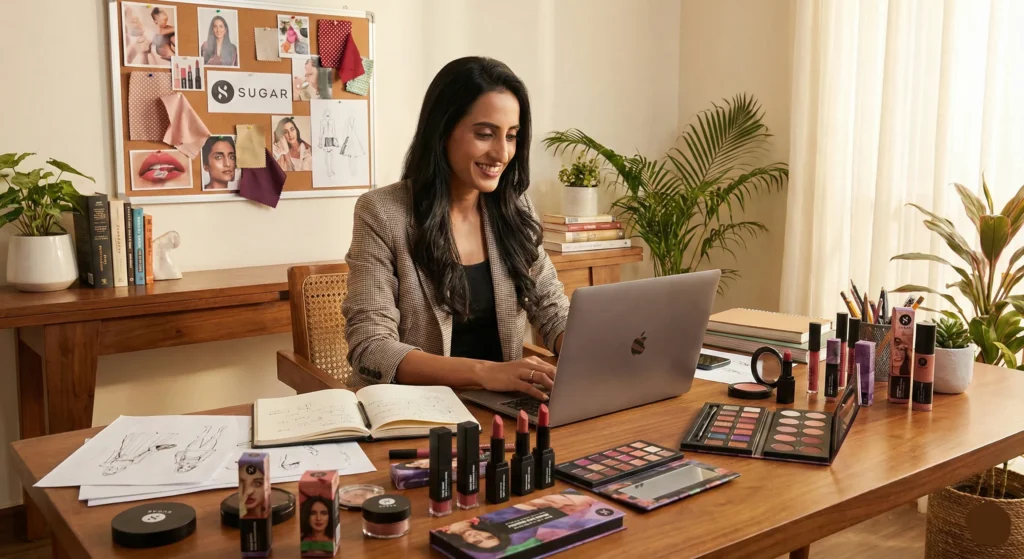
Check Sugar’s Instagram sometime. They’ve got 2.8 million followers. Their YouTube channel? 1.7 million subscribers. That’s not just impressive numbers – that’s a genuine community.
Vineeta herself says that content and community are Sugar’s biggest strengths. And you can see it. Their customers don’t just buy products; they create content, they engage, they become brand ambassadors. This organic reach saves them millions compared to competitors who rely purely on paid advertising.
The Road Here Wasn’t Easy (Like, Really Not Easy)
Let me tell you something that doesn’t get talked about enough. Vineeta Singh pitched to over 100 venture capitalists before getting funding. One hundred. Most people would’ve given up at pitch number 20.
She also turned down a ₹1 crore job offer to start this company. Imagine making that choice. And then imagine facing rejection after rejection from investors who didn’t believe in the vision.
Eventually, she did raise money – about $85 million across multiple rounds from some seriously big names like L Catterton (who led a $50 million round in 2022), A91 Partners, and Elevation Capital. Today, Sugar is valued at around ₹4,100 crore (roughly $500 million). They’re knocking on unicorn status.
But the funding journey shows something important: building a profitable consumer brand in India is hard. Really hard.
Celebrity Power Moves

In 2022, Sugar got a huge boost when Ranveer Singh came on board not just as a brand ambassador but as an investor and “brand evangelist.” Say what you want about celebrity endorsements, but having Ranveer Singh’s energy associated with your brand? That moves the needle.
More recently, they partnered with Kareena Kapoor Khan to launch Quench Botanics, a skincare line. This is smart diversification – they’re moving into the ₹25,000 crore skincare market, which has higher margins than color cosmetics.
How Do They Stack Up Against the Competition?
The beauty market in India is getting crowded. You’ve got RENÉE Cosmetics, Plum, MyGlamm, and then there’s MamaEarth who actually went public in 2023. Plus, all the international giants like L’Oréal, Maybelline, and MAC aren’t exactly sleeping.
Here’s what’s interesting though. While RENÉE nearly doubled their revenue to ₹191.65 crore in FY24, their losses increased significantly. Sugar, on the other hand, is reducing losses while growing. That’s the difference between chasing growth at any cost and building a sustainable business.
MamaEarth’s IPO was particularly important because it showed that Indian D2C brands can actually go public successfully. That paved the way for brands like Sugar.
What Happens Next? The IPO Question
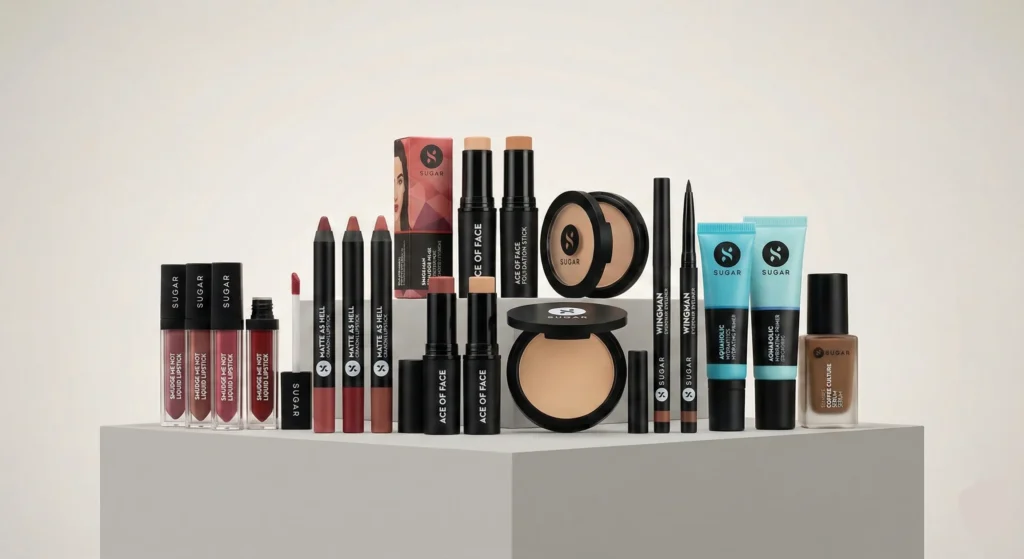
So Sugar wants to go public in 2-3 years. What needs to happen for that to work?
First, they need sustained profitability. One month is great, one quarter is better, but they need to show consistent profits for several quarters. Investors want to see that December 2023 wasn’t a lucky break.
Second, they’re probably aiming to cross ₹1,000 crore in annual revenue. That’s the kind of number that makes you IPO-worthy in the beauty space.
Third, margins need to improve. They can’t keep spending ₹1.16 to make ₹1. That gap needs to close to at least break-even, ideally with some healthy profit margin.
And finally, market conditions need to be right. Nobody wants to launch an IPO when the stock market is crashing or investor sentiment is low.
What Could Make Them Actually Profitable Long-Term?

Let’s be real about what Sugar needs to nail to make this work.
Scale Is Their Friend
As they grow bigger, everything should get cheaper per unit. Buying ingredients in bulk? Cheaper. Negotiating with retailers? Better terms. Distribution? More efficient. This is basic business economics, but it only works if you execute well.
New Categories = New Money
With Sugar Play targeting teens and Quench Botanics going after skincare, they’re expanding their addressable market. Skincare typically has better margins than makeup. If they can crack that market like they did with color cosmetics, the financial picture improves dramatically.
Going Global (Carefully)
Sugar is testing international markets – Russia (where apparently their eye products do really well), Dubai, Korea, Germany, Italy, and even the USA. International expansion is risky and expensive, but if done right, it can provide premium pricing opportunities that just don’t exist in India’s price-sensitive market.
Getting Smarter with Tech
Every rupee spent on marketing needs to work harder. Better data analytics, smarter inventory management, AI-driven supply chain optimization – this isn’t sexy stuff, but it’s what separates profitable companies from the ones that never make it.
Why Sugar Actually Resonates with Customers

You know what’s cool about Sugar? They get it. They understand that Indian women don’t want to be an afterthought. They don’t want products designed for Western skin tones with one or two “Indian” shades thrown in.
Sugar’s products are bold. Their branding is unapologetic. Their message is empowering without being preachy. They’re cruelty-free, which matters to younger consumers. And they price things so that a 22-year-old with her first job can actually afford to buy good makeup.
Plus, they keep launching new stuff. The brand doesn’t feel stale. Every few months, there’s something new to try. That keeps customers engaged and coming back.
So, Is Sugar Cosmetics Profitable? The Real Answer
Here’s my honest take after looking at all this data: Sugar Cosmetics is on the path to profitability, but they’re not quite there yet.
They achieved a huge milestone with that December 2023 profitable month. They’re growing revenue consistently. They’re reducing losses year over year. They’ve built a strong brand, a loyal customer base, and an impressive distribution network. The trajectory is absolutely positive.
But let’s be clear – they’re still losing money overall. They spent ₹67.58 crore more than they made in FY24. That’s not sustainable indefinitely.
However, everything points in the right direction. The losses are shrinking. Revenue is growing. They’re getting more efficient. They have a clear roadmap to sustained profitability and eventual IPO. They’re backed by smart investors who believe in the long-term vision.
The Indian beauty market is exploding. It’s expected to grow exponentially over the next decade. Sugar is well-positioned to capture a big chunk of that growth. They’ve proven they can compete with international giants on their home turf. They’ve shown that Indian consumers will choose a homegrown brand if the quality and understanding are there.
The Bottom Line
Vineeta Singh’s journey from rejecting a ₹1 crore job to building a ₹4,100 crore company is inspirational, no doubt. But more importantly, it’s instructive. She didn’t chase quick wins. She built slowly, learned from failures, and focused on creating real value.
Sugar Cosmetics isn’t profitable yet in the way that Hindustan Unilever or L’Oréal are profitable. But they’re getting there. And honestly? That might be more impressive than if they’d been profitable from day one. It shows they invested in growth, in building infrastructure, in creating a brand that could last.
For anyone watching the Indian startup ecosystem, Sugar’s story matters. It shows that D2C brands can build real businesses, not just hype. It proves that with the right product, the right strategy, and the right persistence, you can compete with global giants.
The sweet taste of sustained profitability is just around the corner. And when they finally get there, it’s going to be well-earned.
Key Takeaways:
- Sugar Cosmetics achieved its first profitable month in December 2023
- FY24 revenue hit ₹505 crore with 20% growth, but still posted ₹67.58 crore loss
- Losses are declining year-over-year, showing improving unit economics
- Planning IPO in 2-3 years once sustained profitability is established
- Over 45,000 retail touchpoints with physical stores driving 50%+ of revenue
- Valued at ₹4,100 crore, approaching unicorn status
- Strong brand community with 2.8M Instagram followers
- Expanding into skincare and international markets for growth